Jeffrey Lambert Jenny Wiley Dulcimer
Instruments- discuss specific features, luthiers, instrument problems & questions
That's great Shawn. Have fun with that!
That's great Shawn. Have fun with that!
Thanks for listening Helen! Be sure to listen to the Fariña Tribute Part 2, we'll be having Terry Hennessy from down under in that episode. And we'd love it if you left a review on iTunes: https://itunes.apple.com/us/podcast/hearts-of-the-dulcimer/id1014348960?at=1010l5QM . That will help our podcast get more visibility. :-)
I'm the complete opposite of Ken, I went chromatic [the big change], no singing, prefer to fingerpick/flatpick/chord [backup] and settling into DAd as my primary tuning. I use my bass and what I call my 'Arkansas bass' [a big TMB an octave lower than the bass] about as much as a standard MD. It seemed to me that everyone was playing the lead melody and few, if any, supported the melody.
Shawn, Sounds like some good time spent with the family. And that's pretty good stuff in my book. 
Deciding to stick to my strength's and abilities rather than 'follow the crowd'.
I'm primarily an 'outie' thumb strummer who plays-sings-plays in Noter & Drone and occasionally fingerdancing style, who changes tunings readily. I'm not a chord playing, sing-along, DAd tuned follower.
Ken, Gotcha! I heard about this journal on the Dulcimer Geek podcast, but I did not make the connection. Thanks!
Oh, no problem, Sheryl. We don't learn if we don't ask questions. DPN is Dulcimer Players News, a quarterly journal for both mountain and hammered dulcimer players. http://www.dpnews.com
Ken
"The dulcimer sings a sweet song."
"Game Changer: a newly introduced element or factor that changes an existing situation or activity in a significant way" [Merriam-Webster]
We're so aware of the negative game-changers--our injuries, the damage or loss of instruments, etc.--but what have been the positive ones that have made a significant difference in our playing?
For me, changing to a dulcimer with a shorter VSL was the first. Using a thin pick to learn fast strumming was another. Learning to fingerpick and locating chords--and scales of chords--on the fretboard were huge game changers for me.
What have been your positive game-changers?
d-chitwood, I have one of those thick felt picks, too. Haven't found anything I like using it on, though. Now, if you want to practice without fear of waking those who are sleeping/studying, etc, then try using a pack of paper "post-it" flags--if you can find some. The ones I use are about the size of address labels and they are gummed into a "pack" at one end. When you use this as a "pick", you can strum those strings with all the vigor you want--and at performance tempo--and only YOU will hear what you are playing. I refer to these as "silent picks" because they're almost silent.
Sheryl--to test the flexibility of a pick to use for fast strumming, I make a fist with my left hand and strum the pick across the fingers on that closed hand. There's a certain "feel" I'm going for--I don't want any "drag". You have to balance that, of course, against the percussive "flapping" noise the pick might make. I couldn't do a fast strum until I tried that super-thin .38 Dunlop! (My first one was "acquired" at a workshop I went to...it was on the floor and none of the people there claimed it as theirs.)
I have a few felt picks I occasionally use on my Uke. The Uke has nylon strings, like a classical guitar. If you want to use felt picks on your steel and metal wound dulcimer strings, be prepared to buy more felt picks. They will wear out quickly. But hey, what's the cost of a few picks if they don't disturb our hubby's sleep? In other words, whatever works. 
So here's a weird thing... I was with some folks who play guitar and one guy had set down a really odd pick. I picked it up and noticed it was thick, only slightly bendy...and....it was made out of felt. It was a full 1/4 inch thick. The guy told me it was used for classical guitar? Anyway, I tried it on my McSpadden, which is only slightly bright and whoa...the sound completely changed! It became slightly muffled and quiet and almost baritone sounding. Really, really cool and different! I guess it could be useful if one was practicing while one's spouse was trying to sleep. :)
Ken, excuse my ignorance, but what is DPN?
Sheryl, I will eventually share the information I collected including the pictures. Right now I am working with this information and with Ralph Lee Smith on an article for DPN.
Ken
"The dulcimer sings a sweet song."
Jan, I love that they sell them by the dozen, because they are like Pokemon cards, trade them with friends! I got my Wegen in a trade. (it's so thick that I haven't grown into it yet) Good tip on your choice of pick for fast strumming. I'm a beginner, but it seems like nobody touts the thin picks, for use on the dulcimer. And hmm, I have a few spiral notebooks around somewhere.
Patricia, I'll leave a positive review on iTunes the 1st chance I get.
Thanks for the compliment Sheryl! Wayne and I are having fun making these episodes.
You can help Hearts of the Dulcimer get seen on iTunes by giving Hearts of the Dulcimer a review or rating on iTunes. To do that, go to: https://itunes.apple.com/us/podcast/hearts-of-the-dulcimer/id1014348960?at=1010l5QM . Then click the link "View in iTunes." After iTunes opens, click on the link "Ratings and Reviews." There's a button on that page called "Write a Review." You need an iTunes account to leave a review.
Thanks so much! :-D
I have dozens and dozens of picks of all shapes, sizes, styles, materials, thicknesses, and colors. Some were purchased by the dozen, some I've acquired in trades with other players, some I've made from various materials. I like very thin flexible picks for fast strumming (paper-thin Dunlop .38). One of my favorites was cut out of the cover of a spiral notebook! It's good for about 90% of the playing I do--but I often can't find it! So even when I have favorite picks, I find I have to "make do" with whatever is handy!
Ken, will you be sharing your photos on FOTMD? Sounds like a very interesting process.
Thank you, Sheryl. Recently I was able to examine the instruments (PA German zithers) in the collection of the Landis Valley Village and Farm Museum that are pictured in L. Allen Smith's "A Catalogue of Pre-Revival Appalachian Dulcimers." Unfortunately none of zithers are on public display. While doing so I found that there is another one in the collection that Allen did not examine. Perhaps it was not there when he visited. I also examined that one taking photos, measuring, and tracing it. These are very interesting instruments.
Ken
"The dulcimer sings a sweet song."
Ken, I ordered a Herdim 'happy pack' this week when I was ordering some new strings. And then I bought a 12 pack of Dunlop .73 mm guitar picks while I was in my local music supply store, and they are now my current favorite picks. When I get the Herdim pack, it will be interesting to see if I have a new favorite. The only Herdim I have used so far, is the yellow one. It's too soft for me. I wonder how many picks the average dulcimer player owns…
Ken, I enjoyed your interview on the Hearts of the Dulcimer podcast. Having been born, and raised, in Upstate NY, I made many trips to PA. My most memorable was a camping trip just outside the fence of a working Amish farm. The Scheitholt has been added to my list of instruments that I eventually want to play.
Patricia, I love the NPR quality of the Hearts of the Dulcimer podcast, and can’t wait for more episodes.
Here are a couple of tunes in Bb. Finger dancing on a 30" scale takes practice, but the sound is something else. The drones are very strong and easily drown out the melody, don't like double melody. I compensate with a slightly stiffer pick. Melody is definitely brighter with a noter stick. I tried it with a psaltery bow which works better than a fiddle bow. I think a large instrument like this is best played on a table top. I prefer bagpipe with its low string over pure Galax...
Made a new just intonated 30" fret ruler so I hope to build an hourglass version by the end of the year. I prefer the sound of the hourglass shape and look forward to how it will sound... Thanks for all your interest and nice complements... Robert.
Wout I'd love to see a little quick video demo of you playing the sculptured bones you have...?
To practise the left hand (or right hand when you are left handed) a good exercise is playing both hands the same, special a changing rhythm. Also playing the right hand playing the rhythm line first and in the same tempo repeat it with the left hand. Another exercise could be playing the beat with left hand and a rhythm at the right, while at the end playing both hands the same rhythm.
About the sound of the left hand, I play one bone between the thumb and the index finger with the latter pressing that bone into the thenar of the hand, so it stays fixed, Placing the other bone between the index finger and the middle finger results in a higher 'pitched' sound than placing it between the middle finger and the ring finger. In the last situation the small resonator 'room' made by the V-shape between the bones and the palm of the hand is larger, so it emphases lower over tones. Doing so with the left hand it will sound lower than the right hand. This effect is much greater than using different types of wood. An exception is made when using different materials, like slate stone, iron or aluminum.
At http://www.bonedrymusic.com/SearchResults.asp?Cat=419 one can find Adam Klein who makes also strange shaped wooden bones. There are some from which you will think: "Impossible to play!" but which makes different sounds by changing the grip. See
I play the Yin-Yang and the Paddle. It is Scott Miller playing. BTW who will ever drop the Yin-Yang? :-)To contact Adam http://www.adamcjklein.us/lilycontact.html using adamcjklein@adamcjklein.us
You've had another successful fest in Winchester, Dana! Way to go!
Tom, that's cool, a boxwood set. They must have a very clear tone, it being such a hard dense wood.
I've been practicing. This evening in fact I played for about an hour along to Brian practicing his fiddle. At this point I can keep semi-decent rhythm 'most' of the time, though I don't have much of any fancy moves yet. Because I'm no longer making a horrific random clatter, Brian now doesn't seem to mind my playing along sometimes as he practices. 
I'm pleased with my progress over the past two months, especially so because I had tried and failed on bones several times over the past few years.
I find my left hand is mostly just doing plain time stuff, while my right hand does the triplets and such. It seems to be veering to that naturally, and I'm letting myself just develop whatever feels good. I remember the advice about how you could take a dozen beginner bones students and have one teacher teach them all the same way...then if you look at them a year or so later every one of them has their own unique style.
I like my wooden bones most of the time, they are easier to handle...but I have some ox shin "Lark" thin bones that have that porcelain-like bone tone that Im trying to work with too. They seem to require a whole different hand position and technique, so that presents additional learning curve I'll have to work through.
For the wooden ones- my favorite right hand pair is a maple Whamdiddle brand pair in the 'short/narrow' size. Then in the right hand my fave pair so far is some Whamdiddle poplar in regular size. I suspect if we practice a lot we can probably make most bones sound pretty good no matter what the wood is or whether we split pairs up. 
The homer ledford festival was a great success once again! I hope to see many of you in the future.
I got it helen and thank u! I need your mailing address again I have a package for u I have had for some time. Please send it to me and I'll get it in the mail.
Tom, that's exciting! Let me know how you like them. My left hand set is minstrel style, from bone dry, made from teak wood. I like them a lot, although they are very different from my right hand set, made of unfinished walnut. But they both have a mellow sound, and do compliment each other.
This may sound weird, but try mixing them up; splitting up the pairs, and see how you likethe sound.
I see what you mean, Wout. Interesting observation.
I noticed today playing the bones and playing the bodhran is in a way the same technique.
Nice story, Robert. I'm sure it's gratifying to finally "free" your dulcimer and let her sing.
Your comment inspired me to learn Pretty Saro - people often mention it, but now I know why! Such a haunting tune! Sounds lovely on the just intonated butternut you made me, Robert. Or, as lovely as I can make it ;-)
No, not mistakes (like when half the group starts playing "Soldiers' Joy" and the other half start on "Whiskey Before Breakfast")............I'm referring to mix-ups that are done on purpose. Here are a few examples:
Have fun!
Sending you big Hugs Dana, Happy you are involved with life and music fun again. Your family continues to be in my prayers. Sending you Love....
Very beautiful instrument, I am inspired along with you.
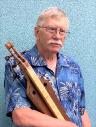
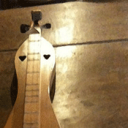
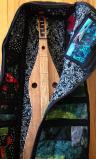
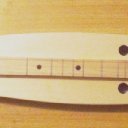
I have a chance to get a beginer Jenny Wiley Dulcimer by Jeffrey Lambert and wondered what anyone thought of his instruments. Same price as one of David Lynch's Sweet Woods, but it is local (no shipping) and available today.
Went ahead and got it. Walnut peghead, poplar fretboard, birch veneer soundboard and back and red oak sides. Wife, son and daughter are all picking out a tune on it so I think it was a good investment.
Very pretty dulcimer Robert. I can see why you were inspired...